
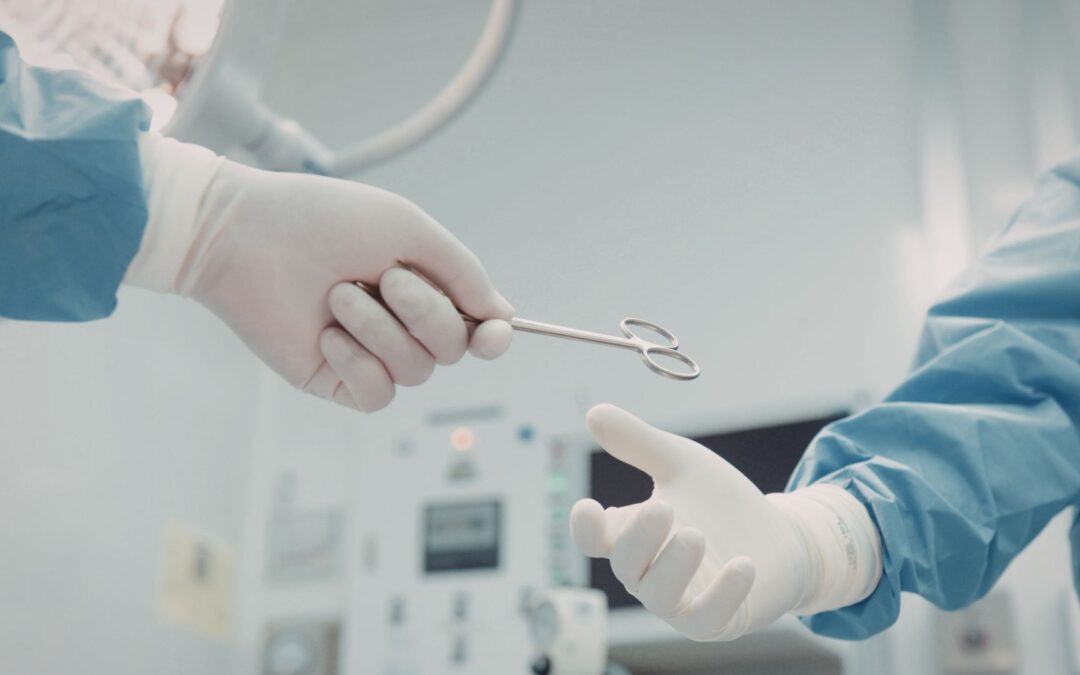
Anterior Cruciate Ligament (ACL) reconstruction has evolved significantly over the last decade, transitioning from highly invasive procedures to precise, minimally invasive techniques. Central to this evolution is the development of specialized orthopedic tools designed to improve graft placement, tensioning, and fixation. For surgeons, utilizing a comprehensive ACL Instrument Set is no longer just a preference—it is a requirement for achieving the anatomical accuracy necessary for long-term joint stability.
This guide outlines the critical stages of a modern ACL reconstruction, highlighting how advanced instrumentation facilitates better patient outcomes.
1. Pre-Operative Preparation and Portal Creation
The procedure begins with the patient under general or regional anesthesia. The knee is positioned to allow for at least 120 degrees of flexion. The surgeon initiates the process by creating anterolateral and anteromedial portals.
Modern instrument sets include high-quality scalpels and trocars that ensure clean entries, minimizing trauma to the surrounding soft tissue. Once the portals are established, a diagnostic arthroscopy is performed to assess the extent of the ACL tear and check for concomitant injuries, such as meniscus tears or cartilage damage.
2. Graft Harvest and Preparation
Depending on the surgical plan, the surgeon will harvest either a bone-patellar tendon-bone (BTB) graft or a hamstring tendon graft. This stage is where the precision of the ACL Instrument Set becomes vital.
Specialized tendon strippers allow for the smooth retrieval of the semitendinosus and gracilis tendons with minimal risk of “premature amputation” of the graft. Once harvested, the graft is taken to a preparation station. Here, graft sizing blocks are used to measure the diameter (typically ranging from 7mm to 10mm). This measurement is crucial because it dictates the size of the tunnels that will be drilled into the femur and tibia.
3. Femoral and Tibial Tunnel Drilling
The “Anatomical Footprint” is the gold standard in modern ACL surgery. To achieve this, surgeons use specialized aimers and guides.
- Tibial Guiding: A tibial tunnel protector and guide are used to ensure the drill pin enters the joint at the exact center of the original ACL attachment site.
- Femoral Guiding: Using a femoral aimer, the surgeon marks the position on the lateral femoral condyle.
Advanced drilling instruments, such as cannulated reamers, allow the surgeon to create the tunnels with high heat resistance, preventing thermal necrosis of the bone. The use of a “flip-cutter” or retrograde drill in some modern sets allows for even more precise socket creation from the inside out, preserving more of the patient’s natural bone stock.
4. Debridement and Notchplasty
Before the graft is passed, the intercondylar notch must be cleared of any remaining ACL remnants that could interfere with the new graft or cause “impingement.” Using various sizes of curettes and arthroscopic shavers found in a standard instrument kit, the surgeon performs a conservative notchplasty. This ensures that when the knee is fully extended, the new ligament has enough space to move without being pinched by bone.
5. Graft Passing and Fixation
Once the tunnels are prepared, a passing wire (often a “Beath Pin”) is threaded through the tunnels. The graft is attached to this wire and pulled upward through the tibial tunnel, across the joint space, and into the femoral tunnel.
Fixation is the final critical step. Modern techniques often utilize a combination of:
- Suspensory Fixation: An adjustable or fixed loop button on the femoral side.
- Interference Screws: Bio-absorbable or titanium screws that wedge the graft against the bone tunnel wall.
A tensioning device is often used at this stage to ensure the graft is not too loose (which causes instability) or too tight (which limits range of motion).
6. Closure and Rehabilitation
After the graft is secured, the surgeon moves the knee through a full range of motion to confirm there is no impingement and that the stability is restored. The portals are closed with sutures, and a sterile dressing is applied.
The Role of Precision Instrumentation
The success of an ACL reconstruction is a marriage of surgical skill and tool reliability. A high-quality ACL Instrument Set provides the tactile feedback and geometric precision required to replicate human anatomy. When instruments are ergonomically designed and manufactured to strict tolerances, surgical time is reduced, and the risk of mechanical failure is significantly lowered.
Conclusion
ACL reconstruction is a complex procedure where millimeters matter. By following a structured, step-by-step approach—supported by the latest advancements in orthopedic instrumentation—surgeons can provide patients with a faster return to sports and a lower risk of revision surgery. As technology continues to advance, the integration of more intuitive and durable instrument sets will remain the cornerstone of successful orthopedic interventions.