
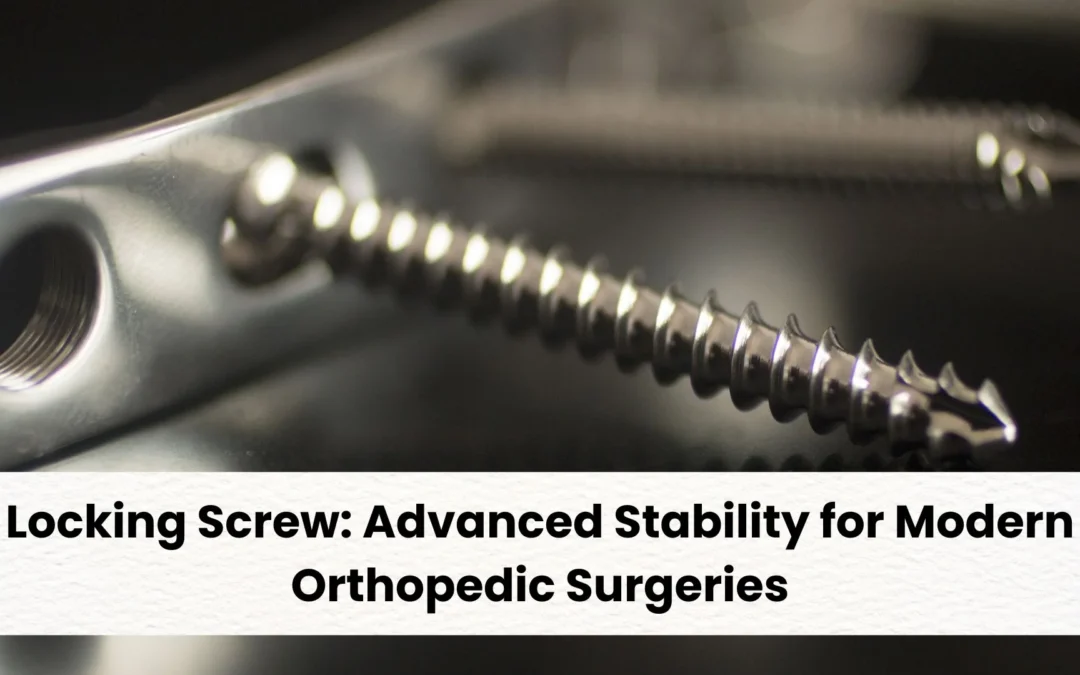
Orthopedic surgery has made remarkable strides over the past few decades, largely due to innovations in implant technology. Among the most significant advancements is the Locking Screw, a vital tool that provides superior stability in modern fracture management and orthopedic reconstruction. Designed for precision, reliability, and long-term success, locking screws have become indispensable in both trauma and elective orthopedic surgeries.
In this comprehensive blog, we will explore the concept of Locking Screw, its design features, applications, benefits, surgical techniques, and why Ortho Care is a trusted provider of high-quality orthopedic implants in India.
What Is a Locking Screw?
A Locking Screw is a type of orthopedic screw designed to work with locking plates or standalone implants to achieve angular stability in bone fixation. Unlike traditional screws that rely on friction between the plate and bone, locking screws “lock” into pre-threaded holes in plates, creating a rigid, fixed-angle construct.
This innovative design provides enhanced stability, reduces the risk of implant loosening, and ensures that even in osteoporotic or fragile bones, the fracture remains securely fixed during the healing process. Locking screws are particularly effective for periarticular fractures, comminuted fractures, and complex bone reconstructions.
Why Locking Screws Are Important in Orthopedic Care
Locking screws have revolutionized fracture management and orthopedic surgeries. Their importance can be summarized as follows:
- Angular Stability – Maintains precise alignment of bone fragments without relying solely on friction.
- Enhanced Load Distribution – Reduces stress on individual screws, minimizing implant failure.
- Reliable in Osteoporotic Bones – Provides secure fixation even in weak or porous bone tissue.
- Minimally Invasive Surgery Compatible – Allows less invasive techniques while maintaining stability.
- Reduced Risk of Complications – Prevents malunion, nonunion, and screw loosening.
Design Features of Locking Screws
The effectiveness of a Locking Screw comes from its carefully engineered design:
1. Threaded Head
- Screws are threaded at the head to lock into plates, creating a fixed-angle construct.
- Prevents rotational and axial movement once fixed.
2. Variable Pitch Threads
- Engage bone effectively and distribute mechanical load evenly.
- Suitable for both cortical and cancellous bone.
3. Tapered Tip
- Facilitates easier insertion and minimizes bone trauma.
- Self-tapping options available for faster placement.
4. Biocompatible Material
- Made from stainless steel or titanium for strength, corrosion resistance, and safety.
5. Cannulated Options
- Hollow screws allow guided placement over a wire for precise positioning.
Types of Locking Screws
- Cortical Locking Screws
- Designed for dense cortical bone.
- Used in shaft fracture fixation.
- Cancellous Locking Screws
- Ideal for spongy bone near joints.
- Wider threads ensure strong grip.
- Cannulated Locking Screws
- Allow guide-wire-assisted placement.
- Common in minimally invasive procedures.
- Variable-Angle Locking Screws
- Permit slight angulation for anatomical flexibility.
- Locking Screws for Pediatric Use
- Designed to stabilize fractures without affecting bone growth.
Applications of Locking Screws
1. Fracture Fixation
- Used in periarticular and metaphyseal fractures.
- Common in tibial plateau, distal femur, proximal humerus, and distal radius fractures.
2. Osteoporotic Bone Surgery
- Ensures reliable fixation in low-density bones.
- Reduces loosening risk in elderly patients.
3. Joint Reconstruction
- Supports stable plate fixation during joint repair or replacement.
4. Spinal Surgery
- Used in pedicle screws and vertebral stabilization.
5. Trauma Surgery
- Effective for complex, multi-fragment, high-energy fractures.
Advantages of Using Locking Screws
- Rigid angular stability
- Reliable fixation in fragile bones
- Early patient mobilization
- Compatible with minimally invasive techniques
- Reduced implant failure
- High versatility across orthopedic procedures
Surgical Techniques Using Locking Screws
- Preoperative Planning – Imaging-based fracture assessment and implant selection.
- Fracture Reduction – Accurate alignment before fixation.
- Screw Insertion – Guide-wire assistance when required and correct torque application.
- Postoperative Monitoring – Imaging to confirm stability and healing progression.
Material Considerations for Locking Screws
- Stainless Steel – Strong, durable, and cost-effective.
- Titanium – Lightweight, corrosion-resistant, and highly biocompatible.
- Polished Surface Finish – Minimizes soft tissue irritation.
- High Mechanical Strength – Withstands axial, bending, and torsional forces.
Postoperative Care with Locking Screws
- Physiotherapy for mobility and strength
- Pain management protocols
- Regular follow-up imaging
- Bone-supportive nutrition
- Controlled weight-bearing and activity modification
Why Ortho Care Is a Trusted Provider of Locking Screws
Ortho Care is a leading provider of high-quality orthopedic implants in India, trusted by surgeons and hospitals nationwide. Their Locking Screws are engineered to meet the highest standards of quality, safety, and precision.
Key Reasons for Trust:
- Premium Quality Implants
- Excellent Biocompatibility
- Wide Range of Designs and Sizes
- ISO-Compliant Precision Manufacturing
- Nationwide Availability and Reliability
Emerging Trends in Locking Screw Technology
- Variable-angle locking systems
- Cannulated and guided screw placement
- Biodegradable locking screws
- Robotic-assisted orthopedic surgery
- 3D-printed, patient-specific implants
Frequently Asked Questions About Locking Screws
- Are locking screws safe?
Yes, when used by qualified orthopedic surgeons. - How are locking screws different from conventional screws?
They lock into plates, creating a fixed-angle construct rather than relying on friction. - Can locking screws be used in osteoporotic bones?
Yes, they are highly effective in weak or porous bones. - Are locking screws suitable for pediatric patients?
Yes, pediatric-specific designs ensure safe fixation during growth. - Can locking screws be removed after healing?
In selected cases, removal is possible, though most are designed for permanent fixation.
Conclusion
The Locking Screw is a cornerstone of modern orthopedic surgery, offering unmatched angular stability, precise fixation, and reliable outcomes for fractures and complex bone conditions. Its advanced design and material strength make it ideal for trauma care, joint reconstruction, pediatric orthopedics, spinal fixation, and osteoporotic bone management.
Ortho Care, as a trusted orthopedic implant provider in India, delivers high-quality Locking Screws engineered for safety, durability, and superior clinical performance. Surgeons across the country rely on Ortho Care to reduce complications, improve healing, and restore patient mobility with confidence.