

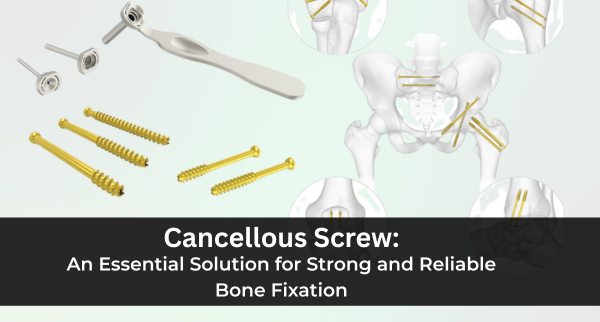
Orthopedic injuries and fractures often require precise and stable fixation to ensure proper healing and long-term mobility. Among the most commonly used orthopedic implants, the cancellous screw plays a vital role in fracture management, especially in bones with softer internal structure. Its design, strength, and adaptability make it an essential component in modern orthopedic surgery.
This blog explains what a cancellous screw is, how it works, its applications, benefits, and why it is crucial in orthopedic care.
What Is a Cancellous Screw?
A cancellous screw is a specially designed orthopedic implant used to fix fractures in cancellous bone, also known as spongy bone. Cancellous bone is typically found at the ends of long bones, such as near the knee, hip, shoulder, and ankle. This type of bone is softer and more porous than cortical bone, requiring a screw that can provide firm grip and stability.
Cancellous screws have a larger thread depth and wider spacing between threads. This design allows them to anchor securely into soft bone, ensuring strong fixation and promoting effective healing.
Why Is a Cancellous Screw Important in Orthopedic Surgery?
Bone healing depends heavily on stability. If fractured bone segments are not held securely in place, healing may be delayed or incomplete. A cancellous screw provides the necessary compression and fixation required for proper bone union.
Orthopedic surgeons rely on cancellous screws because they offer excellent holding strength in spongy bone and help maintain alignment during the healing process. Their reliability makes them a preferred choice in many trauma and reconstructive procedures.
Common Uses of a Cancellous Screw
A cancellous screw is widely used in various orthopedic procedures. Some of the most common applications include:
- Fixation of fractures near joints
- Treatment of ankle and foot fractures
- Fixation of femoral neck fractures
- Repair of tibial plateau fractures
- Fixation of fractures around the shoulder
- Use in joint reconstruction surgeries
Because cancellous bone is commonly found near joints, cancellous screws are especially important in surgeries that aim to restore joint stability and movement.
Design Features of a Cancellous Screw
The effectiveness of a cancellous screw lies in its unique design. Key features include:
- Deep threads that provide strong grip in soft bone
- Wide thread spacing to enhance holding power
- Partially threaded or fully threaded options depending on surgical needs
- Smooth shaft sections to allow compression across fracture sites
These design characteristics ensure that the cancellous screw offers both stability and controlled compression, which are essential for bone healing.
Materials Used in Cancellous Screws
Cancellous screws are typically made from high-quality medical-grade materials such as stainless steel or titanium alloys. These materials are chosen for their strength, durability, and biocompatibility.
Titanium cancellous screws are especially popular due to their lightweight nature and excellent compatibility with the human body. They also reduce the risk of allergic reactions and are suitable for long-term implantation.
Benefits of Using a Cancellous Screw
The use of a cancellous screw offers several advantages in orthopedic treatment:
- Strong fixation in spongy bone
- Improved fracture stability
- Reduced risk of implant loosening
- Better alignment during healing
- Faster recovery when combined with proper rehabilitation
These benefits make cancellous screws an essential tool in both trauma and elective orthopedic surgeries.
Role of Cancellous Screws in Fracture Healing
Fracture healing is a biological process that requires mechanical stability. A cancellous screw helps by holding bone fragments firmly together, allowing new bone tissue to form without disruption.
By maintaining compression at the fracture site, the screw minimizes movement and supports natural healing. This stability reduces pain, lowers the risk of complications, and improves overall surgical outcomes.
Surgical Procedure Involving a Cancellous Screw
The placement of a cancellous screw is performed by an experienced orthopedic surgeon under sterile conditions. The procedure involves careful assessment of fracture type, bone quality, and alignment.
Using imaging guidance, the surgeon positions the screw accurately to achieve optimal fixation. Post-surgery, patients are advised on weight-bearing limits and rehabilitation protocols to ensure safe recovery.
Post-Surgery Care and Recovery
Recovery after surgery involving a cancellous screw depends on factors such as fracture severity, patient age, and overall health. Proper post-operative care plays a crucial role in successful healing.
Patients are usually advised to follow physiotherapy programs, maintain a balanced diet rich in calcium and protein, and attend regular follow-up visits. With appropriate care, most patients experience gradual improvement in mobility and strength.
Why Quality Matters in Cancellous Screws
The success of orthopedic surgery depends not only on surgical skill but also on the quality of implants used. High-quality cancellous screws ensure reliable fixation, reduce the risk of implant failure, and support long-term bone health.
Clinics and hospitals should always choose cancellous screws that meet international quality standards to ensure patient safety and optimal outcomes.
Conclusion
A cancellous screw is a crucial orthopedic implant designed to provide strong and stable fixation in spongy bone. Its unique design, versatility, and reliability make it indispensable in fracture management and joint-related surgeries.
By offering excellent grip, controlled compression, and long-term stability, cancellous screws play a key role in helping patients recover from fractures and regain normal movement. Choosing the right implant and receiving treatment from experienced orthopedic specialists ensures safe healing and better quality of life.
