
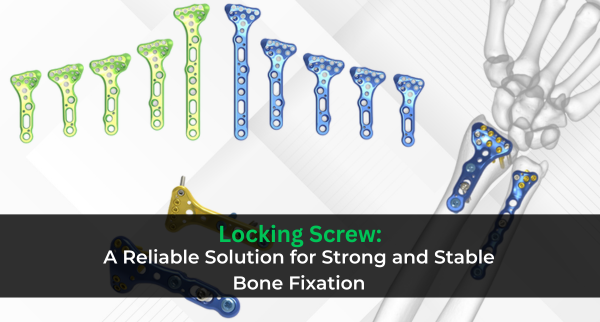
Orthopedic fracture treatment relies on stable fixation to ensure proper bone healing and long-term function. Among the most advanced orthopedic implants, the locking screw has become an essential component in modern fracture management. Designed to provide enhanced stability and precision, locking screws play a critical role in trauma and reconstructive orthopedic procedures.
At Ortho Care, locking screws are developed to support surgeons with dependable fixation solutions that improve surgical outcomes and patient recovery.
What Is a Locking Screw?
A locking screw is a specialized orthopedic implant designed to lock securely into a locking plate, creating a fixed-angle construct. Unlike conventional screws that rely on friction between the plate and bone, locking screws provide stability by locking directly into the plate itself.
This unique mechanism ensures that the screw and plate function as a single stable unit, reducing the risk of loosening and improving overall fixation strength.
Importance of Locking Screws in Orthopedic Surgery
Fracture stability is essential for successful healing. Locking screws are especially valuable in cases where bone quality is poor, such as in elderly patients or individuals with osteoporosis.
By creating a fixed-angle structure, locking screws help maintain proper alignment of bone fragments even under stress. This stability allows for early mobilization and reduces the chances of fixation failure.
Common Applications of Locking Screws
Locking screws are widely used across various orthopedic procedures, including:
- Fracture fixation in trauma cases
- Treatment of osteoporotic fractures
- Complex and comminuted fractures
- Periarticular fractures near joints
- Revision orthopedic surgeries
Their versatility makes locking screws a preferred choice in both routine and complex surgical cases.
Design Features of a Locking Screw
The effectiveness of a locking screw lies in its advanced design. Key features include:
- Threaded screw head that locks into the plate
- Precision-engineered shaft for secure bone purchase
- Compatibility with locking plate systems
- High resistance to pull-out and loosening
These features ensure consistent performance and long-term stability during the healing process.
Materials Used in Locking Screws
Locking screws are typically manufactured using medical-grade stainless steel or titanium alloys. These materials are chosen for their strength, durability, and biocompatibility.
Titanium locking screws offer additional benefits such as reduced weight and improved compatibility with the human body. Ortho Care ensures that all locking screws meet strict quality and safety standards.
Advantages of Using Locking Screws
The use of a locking screw provides several benefits in orthopedic treatment:
- Enhanced fixation stability
- Reduced risk of implant failure
- Improved performance in weak or fragile bones
- Better maintenance of fracture alignment
- Support for minimally invasive surgical techniques
These advantages contribute to improved healing and better patient outcomes.
Role of Locking Screws in Fracture Healing
Bone healing requires both biological and mechanical support. Locking screws provide the mechanical stability necessary to allow natural bone healing to occur without disruption.
By minimizing movement at the fracture site, locking screws reduce pain and promote faster recovery. This stability is particularly beneficial in complex fractures where traditional fixation methods may be less effective.
Surgical Use of Locking Screws
The placement of locking screws requires precision and expertise. Surgeons use specialized instruments to ensure accurate alignment and proper locking within the plate.
At Ortho Care, locking screws are designed to integrate seamlessly with compatible plate systems, supporting efficient and accurate surgical workflows.
Post-Surgical Recovery and Rehabilitation
Recovery after surgery involving locking screws depends on the nature of the fracture and the patient’s overall health. Stable fixation allows for controlled movement and early rehabilitation in many cases.
Patients benefit from reduced pain, improved confidence in movement, and a structured recovery plan supported by stable fixation.
Quality and Reliability of Ortho Care Locking Screws
Quality is a defining factor in the success of orthopedic implants. Ortho Care locking screws are manufactured under strict quality control processes to ensure consistency, precision, and reliability.
Each locking screw undergoes thorough inspection to meet international standards, ensuring safety and performance in surgical applications.
Locking Screws in Modern Orthopedic Practice
With advancements in orthopedic techniques, locking screws have become a cornerstone of modern fracture management. Their ability to provide stable fixation in challenging cases has made them indispensable in trauma care.
Ortho Care continues to innovate by refining locking screw designs to meet the evolving needs of surgeons and patients.
Conclusion
A locking screw is a vital orthopedic implant that provides strong, stable, and reliable fixation in fracture treatment. Its fixed-angle design enhances stability, reduces complications, and supports effective bone healing.
At Ortho Care, locking screws are engineered with precision and quality to support successful orthopedic outcomes. By combining advanced design with high-quality materials, Ortho Care delivers solutions that help patients recover safely and regain mobility with confidence.