
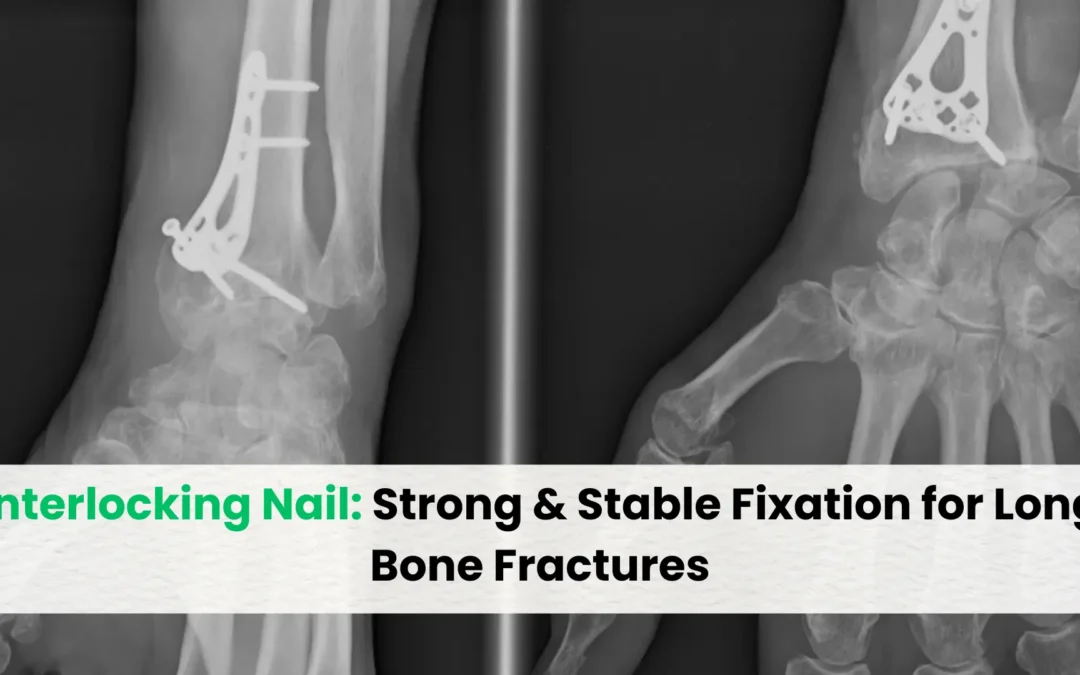
Long bone fractures, such as those in the femur, tibia, or humerus, require precise surgical treatment to ensure proper healing and restoration of function. Among the advanced orthopedic solutions, the Interlocking Nail has emerged as one of the most reliable and effective methods for stabilizing long bone fractures.
In this comprehensive blog, we will discuss the importance of Interlocking Nails, their types, applications, advantages, surgical procedures, post-operative care, and why OrthoCare is a trusted provider of high-quality orthopedic implants in India.
What Is an Interlocking Nail?
An Interlocking Nail is a specialized metal rod used in orthopedic surgery to stabilize fractures of long bones. Unlike traditional intramedullary nails, which rely solely on friction for stability, interlocking nails use screws at both ends of the nail to “lock” it in place.
Typically made of stainless steel or titanium, interlocking nails are biocompatible, strong, and designed to withstand the mechanical stress of weight-bearing bones.
Why Interlocking Nails Are Important for Long Bone Fractures
- Stable Fixation
- Early Weight-Bearing
- Minimized Risk of Malunion
- Versatility
- Reduced Healing Time
Types of Interlocking Nails
- Solid Interlocking Nails
- Cannulated Interlocking Nails
- Dynamic Interlocking Nails
- Static Interlocking Nails
- Locking Screw Configurations
Surgical Applications of Interlocking Nails
- Femoral Shaft Fractures
- Tibial Shaft Fractures
- Humerus Fractures
- Comminuted Fractures
- Pathological Fractures
Advantages of Interlocking Nails
- Rigid Stability
- Minimally Invasive
- Early Mobilization
- High Union Rates
- Reduced Complications
- Versatile Use
Material and Design Considerations
- Material
- Stainless Steel
- Titanium
- Nail Design
3. Surface Finish
4. Biomechanical Strength
High-quality interlocking nails, like those provided by OrthoCare, ensure durability, safety, and optimal patient outcomes.
Surgical Procedure for Interlocking Nail Fixation
- Preoperative Planning
- Anesthesia and Positioning
- Fracture Reduction
- Nail Insertion
- Locking Screws
- Closure and Recovery
Post-Operative Care and Rehabilitation
- Physiotherapy
- Follow-Up X-Rays
- Pain Management
- Diet and Nutrition
- Activity Restrictions
Why OrthoCare Is a Trusted Provider of Interlocking Nails
- High-Strength Implants
OrthoCare nails are designed to withstand mechanical stress and ensure rigid fixation. - ISO-Certified Quality
Manufactured under strict quality standards for safety and reliability. - Variety of Options
Solid, cannulated, dynamic, and static interlocking nails. - Surgeon Support
OrthoCare offers guidance and training. - Nationwide Trust
Hospitals and clinics across India rely on OrthoCare implants.
Frequently Asked Questions
(unchanged as original)
Conclusion
The Interlocking Nail is a revolutionary solution for long bone fractures, offering strong and stable fixation for accurate healing and faster recovery.
High-quality interlocking nails from OrthoCare provide surgeons with reliable, durable, and biocompatible implants. Whether femoral, tibial, or humeral fractures, interlocking nails offer a safe and effective solution.
For trusted, high-strength Interlocking Nails and orthopedic implants, visit OrthoCare and explore their comprehensive range designed for optimal bone healing and long-term care.