
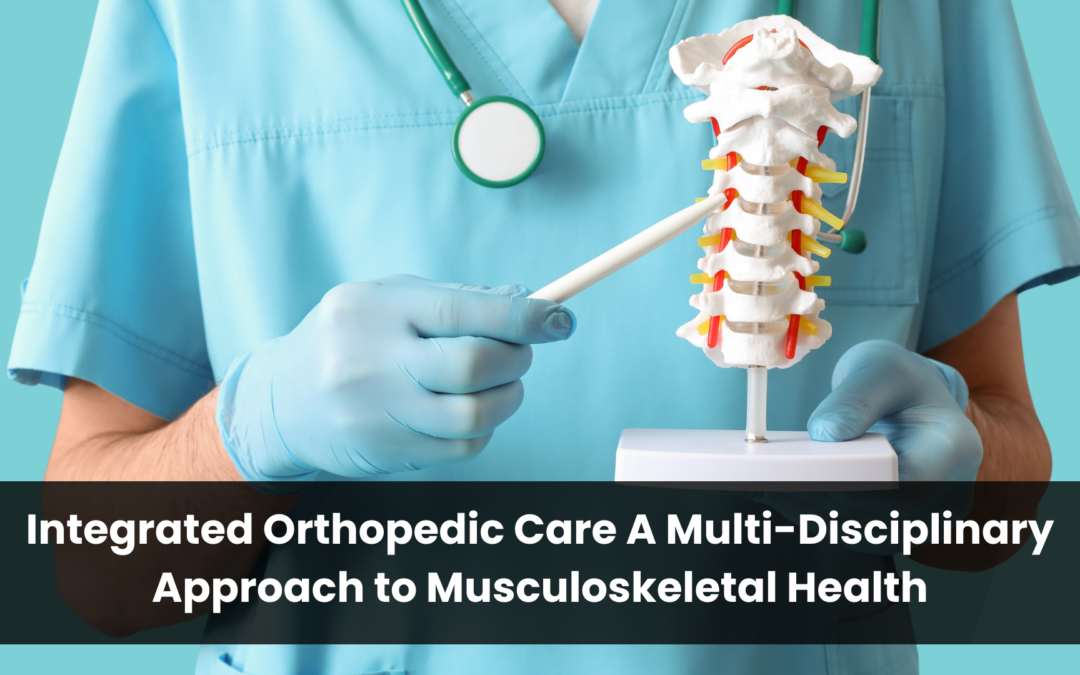
The human musculoskeletal system is a marvel of biological engineering, comprising a complex network of 206 bones, over 600 muscles, and a vast array of tendons, ligaments, and cartilage. When an injury or degenerative condition strikes, the impact ripples across every aspect of a person’s life from their ability to perform professional tasks to their basic independence.
The traditional “siloed” model of medicine, where a surgeon only operates and a therapist only rehabilitates, is rapidly becoming a relic of the past. Today, the gold standard for restoring movement is Orthopedic Care delivered through a multi-disciplinary lens. This approach integrates surgery, technology, physiotherapy, and pain management into a seamless continuum of healing.
What is Integrated Orthopedic Care?
Integrated care is not just about having different specialists in the same building; it is about shared communication and a unified patient goal. In this model, the treatment plan is not a static prescription but a dynamic strategy that evolves as the patient progresses.
By bringing together orthopedic surgeons, radiologists, physical therapists, and nutritionists, the healthcare team can address the “whole patient” rather than just a single fracture or a worn-out joint. This collaboration ensures that the transition from the operating theater to the physical therapy clinic is fluid and based on real-time data.
The Pillars of a Multi-Disciplinary Approach
To achieve long-term musculoskeletal health, the framework must rest on several essential pillars that work in tandem:
1. Advanced Diagnostic Accuracy
Effective Orthopedic Care begins with seeing what the naked eye cannot. Integrated centers utilize high-definition imaging, such as 3-Tesla MRI and CT scans, combined with diagnostic arthroscopy. When a radiologist and a surgeon review these images together, the accuracy of the diagnosis increases, ensuring that the subsequent treatment targets the root cause of the pain rather than just the symptoms.
2. Innovation in Surgical Intervention
When conservative treatments fail, surgery may be necessary. However, the modern approach prioritizes “Biological Fixation.” Whether it is a joint replacement or a complex fracture repair using advanced nailing systems, surgeons now use minimally invasive techniques. These methods reduce tissue trauma, preserve blood supply, and utilize precision-engineered implants that mimic the natural density of bone.
3. Proactive Physical Rehabilitation
In an integrated system, rehabilitation doesn’t start after the cast comes off—it starts before the surgery even begins. “Pre-habilitation” prepares the muscles for the stress of surgery, making the post-operative recovery significantly faster. Physical therapists work alongside the surgical team to create tailored protocols that emphasize “early mobilization,” which is critical for preventing blood clots and joint stiffness.
4. Pain Management and Nutritional Support
Chronic pain often has a neurological component. Integrated Orthopedic Care involves pain specialists who use nerve blocks and non-opioid medications to manage discomfort. Furthermore, nutritionists play a vital role by recommending anti-inflammatory diets and supplements—like Vitamin D3 and Calcium—that provide the raw materials the body needs to repair bone and soft tissue efficiently.
The Role of Technology in Integration
Digital health has become the glue that holds integrated Orthopedic Care together. Electronic Health Records (EHR) allow a therapist in a different facility to see the surgeon’s intra-operative notes instantly. Additionally, wearable technology now allows doctors to monitor a patient’s range of motion and step count in real-time. This allows the team to adjust the recovery plan remotely, ensuring the patient stays on track without needing to travel for every minor check-up.
Conclusion: A New Standard for Quality of Life
Musculoskeletal health is the foundation of a life well-lived. Whether you are an athlete looking to return to the field, a professional seeking relief from carpal tunnel syndrome, or a senior citizen reclaiming the joy of walking, the approach to your care matters.
Integrated Orthopedic Care represents the future of medicine—a future where technology and human expertise converge to treat the person, not just the x-ray. By choosing a multi-disciplinary path, patients ensure that every facet of their recovery is optimized, leading to a stronger, more mobile, and pain-free future.