

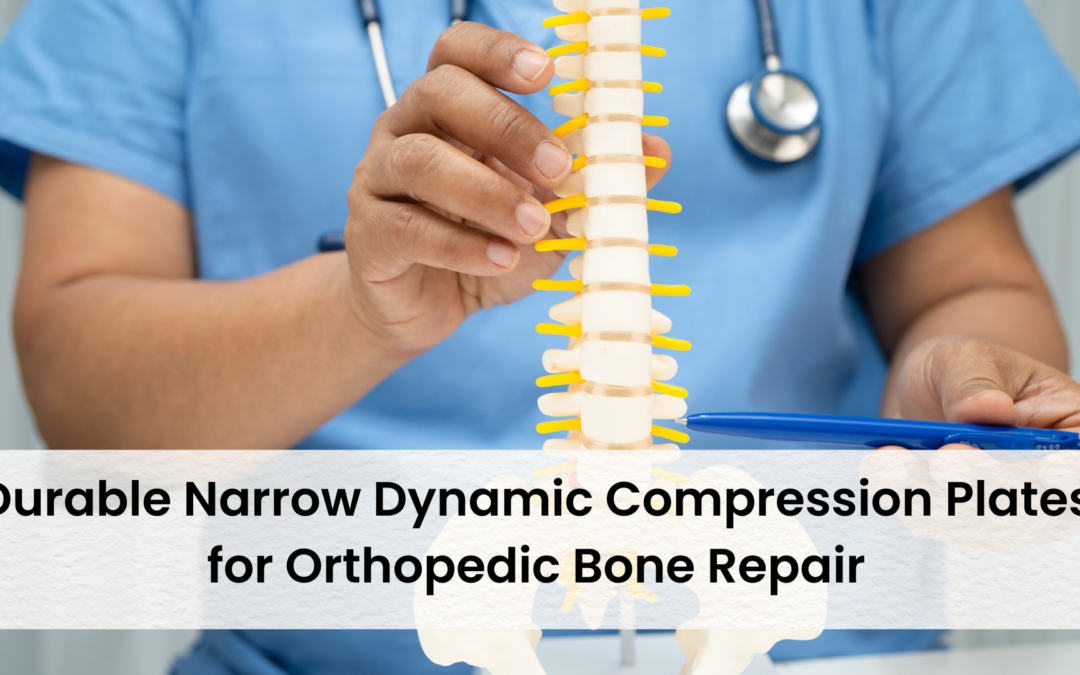
When it comes to fracture fixation and bone repair, the role of implants cannot be overstated. Among the many options available to the modern orthopaedic surgeon, the technique of compression plating has established itself as a cornerstone of stable fixation. In particular, the use of narrow dynamic compression plates has become a valuable tool in the armamentarium — offering design features that promote bone healing, minimize soft tissue disruption and accommodate challenging anatomical sites. In this blog we explore the concept, design, indications, advantages and surgical considerations of narrow dynamic compression plates (NDCPs) — with a view to how providers like Ortho Care deliver high-quality solutions for trauma and bone repair.
Understanding Dynamic Compression Plating
To appreciate narrow dynamic compression plates, it’s helpful to understand the general concept of dynamic compression plating. In fracture fixation, the goal is to provide stable alignment of the bone fragments, encourage timely healing, and restore mechanical function. A dynamic compression plate (DCP) is designed so that when the bone screws are tightened into the plate’s specially shaped holes, controlled compression is applied across the fracture site. This compression holds fragments tightly together, reducing micromotion and stimulating bone healing by enhancing primary (direct) bone healing pathways.
The plate’s hole shape (often an oval or elongated slot) allows a bolt or screw to slide as it is tightened, shifting the plate relative to the bone in ways that generate axial compression. With proper surgical technique, the DCP becomes a tension bar on the convex side of the bone, resisting bending and shear, while the friction and compression at the bone-plate interface stabilise the fracture.
In many trauma cases, the DCP remains the gold standard for long bone fractures, metaphyseal injuries and certain peri-articular repairs. Build quality, biocompatibility, mechanical strength and design optimisation all play essential roles.
Why Narrow Dynamic Compression Plates?
So what do we mean by a narrow dynamic compression plate, and why is this variant important?
- Anatomical fit in smaller bones or limited spaces
Narrow DCPs are typically designed with a reduced width compared to standard plates. This makes them ideal in anatomical regions where bone size is smaller or where soft tissue coverage is limited — for example in the distal radius/ulna, the proximal humerus, distal humerus, clavicle, or in paediatric applications. Their slimmer profile helps reduce soft tissue irritation and allows easier contouring in tight anatomical confines. - Reduced hardware prominence
One of the common concerns with plate fixation is hardware prominence, especially when the plate sits under thin soft tissue coverage (as in the forearm or sub-cutaneous bones). A narrow plate reduces the bulk, mitigates irritation to tendons and soft tissue, and may reduce the need for hardware removal later. - Preservation of vascular supply and bone biology
A narrower plate can better spare the periosteal blood supply since it contacts less bone surface area, reducing disruption of the bone’s biological milieu. In fracture management, preserving biology often correlates with improved bone healing. - Mechanical optimisation
Although the plate is narrower, modern manufacturing and material science (high-grade stainless steel or titanium alloys) allow the plate to maintain high fatigue strength and bending resistance. In other words: you get the benefit of compression plating in a slimmer form factor. - Versatility in dynamic compression
The narrow DCP retains the same principle of applying compression across the fracture via slot-hole design. Thus, surgeons can still use the dynamic compression feature (shifting the screw within oval holes) to apply axial compression to the fracture site, even in more delicate anatomical regions.
Design Features of Durable Narrow DCPs
When selecting a narrow dynamic compression plate for clinical use, certain design and manufacturing features matter. A manufacturer such as Ortho Care emphasises several key criteria:
- High-quality biomaterials: Stainless steel (316L) or titanium alloy (Ti-6Al-4V) with certified biocompatibility, corrosion resistance and fatigue strength.
- Precise hole geometry: The dynamic compression holes must be accurately machined to permit sliding of the screw head and translate that motion into fracture compression.
- Tapered plate edges and low profile: To reduce soft tissue irritation and ease plate insertion and contouring.
- Variable lengths and hole options: Surgeons may require plates with different numbers of holes (e.g., 6, 8, 10) and with locking/unlocking options for hybrid fixation.
- Contouring capacity: The plate should be amenable to bending/contouring intra-operatively to match the anatomical curvature without compromising mechanical integrity.
- Durability and fatigue resistance: The plate must withstand cyclic loading in vivo, resisting failure especially in weight-bearing or high-stress applications.
- Surface finish and passivation: Good surface finish reduces micro-irregularities that can act as stress risers, and proper passivation ensures corrosion resistance.
- Sterilisation and traceability: Each implant should come with a unique lot or serial number, meet regulatory standards (ISO 13485, CE, FDA clearance as applicable) — the Ortho Care website emphasises these standards.
By selecting a well-designed narrow dynamic compression plate that meets these criteria, the orthopaedic surgeon can rely upon the implant to perform as intended and reduce complications.
Clinical Indications and Use-Cases
Narrow dynamic compression plates are appropriate in a wide range of fracture scenarios. Some common indications include:
- Clavicle fractures: Mid-shaft clavicle fractures with displacement or shortening often benefit from plate fixation. A narrow DCP sits well under the skin and avoids bulky hardware.
- Forearm fractures (radius/ulna): The relatively small bone diameter here and sub-cutaneous location favour narrower plates which minimise soft tissue irritation.
- Metaphyseal fractures in humerus or tibia: Where anatomy is slimmer, narrow plates can help.
- Peri-articular fractures where plate bulk is a concern: For example distal radius, distal humerus, proximal ulna – narrow DCPs can reduce interference with joint motion or soft tissues.
- Paediatric and adolescent fractures: In younger patients with smaller skeletal geometry, narrower plates provide appropriate sizing without overengineering.
- Revision surgery or bone loss situations: Where implant space is limited or bone geometry has been compromised, choosing a lower profile narrow plate can be advantageous.
Surgeons should evaluate each fracture individually (bone quality, fracture pattern, patient activity level, soft tissue envelope) before choosing a fixation strategy. Narrow DCPs form a valuable option among many.
Surgical Technique & Considerations for Narrow DCPs
When using a narrow dynamic compression plate, there are certain surgical steps and considerations that help maximise success:
- Pre-operative planning
- Assess the fracture pattern and choose appropriate plate length and width; ensure the plate covers enough bone length on either side of the fracture for optimal stability.
- Confirm that a narrow plate is apt for the anatomical location – check soft tissue coverage, contour needs, and biomechanics.
- Have available locking and non-locking screw options, sometimes hybrid fixation (a combination) is helpful.
- Exposure and preparation
- Gentle handling of soft tissues is critical, especially when soft tissue coverage is minimal; the low profile of a narrow plate helps.
- Clear out any interposed tissue or fragments and maintain good alignment of fragments.
- Ensure the bone surface is prepared but avoid excessive periosteal stripping — preservation of biology is key.
- Reduction and provisional fixation
- Achieve anatomical or near-anatomical reduction before plate application — if the fracture is malreduced, the plate will merely maintain a sub-optimal alignment.
- Use clamps, K-wires or reduction aids as needed. Once reduction is acceptable, apply the plate.
- Plate application and screw insertion
- Position the narrow dynamic compression plate along the bone so that the dynamic compression hole(s) straddle the fracture site in a way that allows compression when screws are inserted.
- Insert at least one cortical screw into a static hole to hold the plate in position (often near the middle of the plate away from the fracture).
- Then slide the screw in the dynamic compression hole — as you tighten the screw, the shaft of the plate moves relative to the bone and compresses the fracture line.
- Follow by inserting the remaining screws (cortical/locking as per design) ensuring bicortical purchase (if appropriate) and good fixation.
- Confirm that the plate is flush, low profile, no soft tissue irritation, and that all screws are seated correctly.
- Compression check and final assessment
- After insertion of the dynamic compression screw, check radiographically (fluoroscopy) that the fracture gap is eliminated or minimal, and that compression has been achieved.
- Confirm alignment, hardware positioning, screw length, and plate contour.
- Ensure no screws perforate joints, soft tissues or vital structures.
- Post-operative care
- Early mobilisation where allowed by the fixation and fracture site. The low profile narrow plate helps reduce soft tissue irritation, enabling earlier functional therapy.
- Follow standard protocols: weight-bearing (if applicable), physical therapy, monitoring for complications (infection, non-union, mal-union, hardware irritation).
- With narrower plates, hardware removal may be less frequent—but if symptoms arise, the slimmer implant is often easier to remove.
Advantages of Narrow Dynamic Compression Plates in Practice
Selecting a high-quality narrow DCP brings several practical benefits:
- Improved patient comfort: Because the plate is narrower and lower profile, patients often report less irritation from the hardware, particularly in areas where the plate lies sub-cutaneously.
- Minimised soft tissue compromise: Less plate bulk reduces the risk of tendon or soft‐tissue impingement, aiding both function and healing.
- Preservation of periosteal blood supply: Reduced plate width means less bone surface contact, which helps maintain local bone biology—important for union.
- Ease of contouring and fit: Narrow plates adapt better to smaller or complex anatomy, enabling closer conformity and less intra‐operative adaptation.
- Reliable compression mechanics: Even in a narrower profile, the dynamic compression features (slotted holes, screw movement) allow the surgeon to induce controlled compression across fracture sites, promoting stability and primary bone healing.
- Reduced removal rates: While hardware removal decisions depend on many factors, lower profile implants are less likely to cause symptoms requiring removal—potentially reducing secondary surgery.
- Cost-effectiveness: With modern manufacturing, high-quality narrow DCPs from reputed sources (such as Ortho Care) offer durability and performance without excessive cost premium relative to broader plates.
Key Challenges and How to Mitigate Them
While narrow dynamic compression plates are highly useful, there are considerations and potential drawbacks that surgeons must address:
- Load-bearing limitations: Because the plate is narrower, in larger bones or weight-bearing situations its cross-sectional strength may be less than a wider plate. Solution: ensure plate length, screw configuration and bridging constructs are appropriate; consider load-sharing or supplementary fixation if needed.
- Contour limits: Some narrow plates may be less robust for aggressive contouring. Solution: verify manufacturer instructions for bend angles and use dedicated bending tools. Avoid excessive intra-operative bending that can weaken the plate.
- Soft tissue coverage still necessary: Even though narrow plates are lower profile, they still require adequate soft tissue coverage and surgical care. Solution: meticulous soft-tissue handling, closure and post-operative care.
- Screw-plate interface stress: The smaller width means that screws and plate holes may bear higher stresses locally. Solution: Use manufacturer‐recommended screw lengths, ensure proper screw purchase, consider locking screws in osteoporotic bone.
- Fracture pattern suitability: Not all fractures are ideal for narrow DCPs (e.g., highly comminuted, segmental, or high‐energy weight‐bearing long bone fractures). Solution: choose fixation strategy carefully and augment when needed (e.g., bridging plating, locking plate, intramedullary fixation).
- Surgeon learning and planning: Successful use of narrow DCPs still demands sound surgical planning, reduction, plate placement and screw technique. Solution: maintain training, use intraoperative imaging, select implants from trustworthy suppliers.
Why Choose Ortho Care’s Narrow Dynamic Compression Plates?
For hospitals, surgical centres and orthopaedic practices looking for reliable narrow dynamic compression plates, Ortho Care stands out for several reasons based on their website and company profile:
- Proven manufacturing credentials: Ortho Care is certified to ISO 13485:2016, CE certified, and U.S. FDA 510(k) cleared, underscoring rigorous quality standards.
- Broad product range: They offer an extensive catalogue including bone plates, locking plates, dynamic hip compression screws & plates, mini/ small/ large fragment plates, and special implants.
- Focus on innovation and affordability: Their mission emphasises developing high-impact yet affordable implants for both domestic and global markets.
- Global reach and experience: With presence in 60+ countries and 27+ years of industry experience, users benefit from a history of performance and feedback loops.
- Custom-label and support services: Ortho Care offers private labelling and tailored services, meaning institutions can manage inventory and brand consistency more effectively.
When selecting a narrow dynamic compression plate from Ortho Care, hospitals can be confident in the implant’s pedigree, mechanical design and supporting supply chain.
Case Example: Forearm Fracture with Narrow DCP
Let’s consider a practical example: A 45-year-old male fractures his distal radius (and proximal forearm) from a fall on an outstretched hand. Because the radius and ulna are relatively small bones with limited soft tissue coverage, a narrow dynamic compression plate becomes an attractive option.
- Pre-operatively, the surgeon selects a narrow DCP from the Ortho Care catalogue, choosing an 8-hole narrow plate with dynamic compression slots near the fracture site.
- Intra-operatively, anatomical reduction of the radius is achieved and verified. The plate is contoured gently to follow the radius curvature. One cortical screw in a static hole secures the plate, then the next screw in the dynamic slot is inserted and tightened; as the screw head moves within the slot, the plate shifts slightly and compresses the fracture line.
- Remaining screws secure the plate proximally and distally. A locking screw may be used distally in osteoporotic bone. Soft tissues are closed carefully.
- Post-operative radiographs show excellent alignment, no gap at the fracture site, and implant sits low under the skin. Because of the narrow plate profile, the patient reports minimal implant irritation. Early wrist motion is begun gradually, and at 8 weeks the fracture is consolidating.
- At 12 weeks the patient is back to near-normal function. Because the hardware is low-profile the need for removal is low; the surgeon counselled the patient that hardware removal is optional unless symptomatic.
This case highlights how a narrow dynamic compression plate can deliver high‐quality fracture fixation while minimising implant bulk and enhancing patient comfort.
Future Trends and Innovations in Narrow DCPs
The field of orthopaedic implants continues to evolve, and narrow DCPs are no exception. Some future directions include:
- Locking dynamic compression plates: Combining dynamic compression slots with locking screw options to give the benefits of compression plus fixed‐angle stability. This hybrid approach is increasingly popular.
- Variable geometry plates: Narrow plates designed with multi-axis holes, prebent shapes, and modular components to suit specific anatomical sites.
- Low-profile and anatomical shaping: As anatomical data grows via imaging and 3D modelling, plates can be shaped more precisely to bone contours while minimising width and thickness.
- Enhanced biomaterials and coatings: Use of bioactive coatings (e.g., hydroxyapatite, antibiotic coatings) and advanced titanium alloys to increase biocompatibility, promote osseointegration and reduce infection risk.
- Smart manufacturing and patient-specific implants: 3D printed narrow plates, custom-designed to patient anatomy, though still emerging, will become more accessible.
- Biomechanical optimization via finite-element modelling: Improved designs by simulating load, fatigue and micromotion to ensure narrow plates meet performance expectations.
Providers like Ortho Care that invest in R&D and manufacturing innovation will be well-positioned to bring new generation narrow dynamic compression plates to market — improving outcomes and expanding indications.
Summary: The Value Proposition
In summary:
- Narrow dynamic compression plates offer a compelling combination of anatomical fit, mechanical functionality and minimal hardware bulk.
- When properly designed and manufactured, they deliver the same principle of compression plating (which promotes stable fixation and bone healing) but in a slimmer, more tissue-friendly form.
- Clinical indications include smaller bones, peri-articular fractures, forearm/ clavicle/ metaphyseal sites, paediatric applications and cases where soft tissue coverage is limited.
- Surgical success depends on good reduction, correct plate choice, precise screw technique, and proper post-operative rehabilitation.
- High-quality implants from a trusted manufacturer (such as Ortho Care) provide confidence in material, design and global regulatory standards.
- Future innovations will enhance narrow DCPs further via locking hybrid systems, anatomical shaping, enhanced materials and customisation.
For orthopaedic surgeons, trauma centres and implant procurement teams, the decision to include narrow dynamic compression plates in the toolkit is a strategic one — allowing versatile, patient-friendly, and high-performance fixation options across a broad array of fracture types.
Final Thoughts
Bone repair is as much about biology and patient factors as it is about mechanical fixation. Implants should not intrude on healing but should facilitate it. Narrow dynamic compression plates represent a thoughtful “fit” in modern orthopaedic practice — they give you the dynamic compression capability, structural stability and surgeon autonomy, while reducing implant bulk, soft tissue disturbance and patient discomfort.
At Ortho Care, the commitment to high-quality, affordable implants means that your facility can adopt narrow dynamic compression plates with confidence: implants built to standard, backed by decades of experience, and tailored to trauma needs across India and internationally. When you pair sound surgical technique with a well-designed narrow DCP, patients benefit through earlier mobility, fewer hardware-related symptoms and predictable bone union.
If your hospital or practice is assessing fracture fixation systems, consider how narrow dynamic compression plates might fill gaps in your inventory — especially in anatomically constrained or soft tissue-challenged sites. Make sure the implants meet recognised standards (ISO 13485, CE, FDA as applicable), use reputable suppliers, and follow surgical best practices. With those elements in place, the narrow DCP becomes not just “another plate” but an optimal choice for many fractures.
Thank you for reading. For more information on the portfolio of narrow dynamic compression plates and related trauma implants, you can visit Ortho Care’s products section on aocare.in and get in touch for implant specifications, catalogues and logistical support.
